
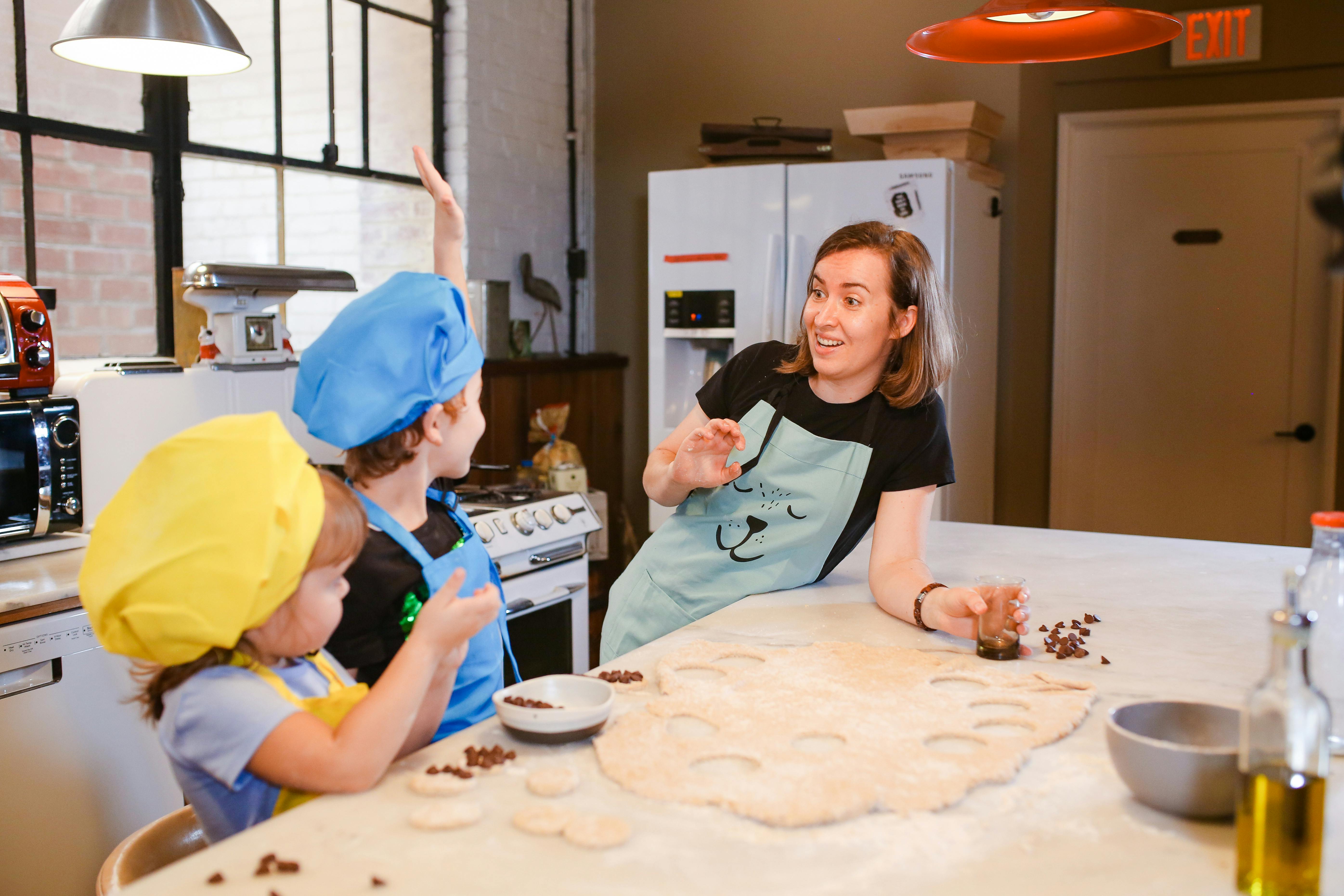
Every home has a room perfectly suited for teaching children—and it isn’t a playroom or a study nook. It’s the kitchen. From the time children are as young as one, this everyday space can introduce them to nearly every major subject taught in school: language arts, math, science, art, social studies, and physical development.
Finding time for structured learning can feel overwhelming, but eating is something every family does daily. With a little intention, mealtime and food preparation become rich opportunities for curiosity, connection, and skill‑building. Across simple tasks—from stirring batter to naming vegetables—the kitchen naturally supports learning in every developmental domain.
Exploring the Five Senses
Food engages every sense—taste, smell, sight, touch, and sound—which makes it an ideal starting point for sensory learning. As children explore ingredients and meals, they build vocabulary, observation skills, and confidence.
Try inviting your child into the process by:
- Asking simple, open‑ended questions while preparing dinner
- Blindfolding them and letting them identify foods using smell, touch, or taste
- Turning grocery shopping into a game by naming foods that start with the same letter
- Comparing foods—such as apples and pears—by describing similarities and differences
Once children begin noticing the world through their senses, creativity naturally follows.
Creating Art With Food
In the kitchen, creativity comes alive through food. Gingerbread people, radish flowers, Jell‑O molds, and decorated cakes all show how culinary creations overlap with art. Children can explore shape, color, texture, and design in hands‑on ways:
- Mixing peanut butter, honey, and dry milk to form an edible play dough
- Building faces using apple slices, raisins, shredded carrots, and other produce
- Creating collages from food photos cut out of old magazines
- Drawing or painting favorite foods
These playful activities help children express themselves while strengthening fine motor skills and imagination.
Building Math Skills
Creativity isn’t the only skill simmering in the kitchen—math is everywhere too. Ask a chef about their most important tool, and many will say the calculator. Math is woven into every recipe and meal:
- Counting cups of flour while baking bread
- Subtracting what’s already been added from what’s still needed
- Determining how many slices of bread are required if each person gets two
Even young children who can’t yet solve these problems independently learn by hearing you think aloud. Doubling a pancake recipe or dividing a pizza becomes a natural way to practice counting, measuring, estimating, and problem‑solving.
Connecting Food to Social Studies
Food offers a delicious entry point into geography and culture. Pasta traces back to Italy, scones to Britain, and potato pancakes to Germany. Many everyday meals have roots in global traditions.
Within the United States, foods also reflect regional identity—Florida and California oranges, Wisconsin cheese, Maine lobster. Children often memorize these facts in school, but learning them at the dinner table makes the information far more engaging and memorable. As kids discover where foods come from, they begin to understand the world and its diverse cultures.
Strengthening Fine Motor Skills
Preparing and eating food supports fine motor development in ways that feel like play. Everyday tasks help children build dexterity, coordination, and independence:
- Picking up small pieces of food
- Spearing fruit with a toothpick
- Stirring, rolling, peeling, spreading, and kneading
- Serving food and helping with cleanup
These simple movements lay the groundwork for writing, self‑care, and other essential skills.
Introducing Nutrition Basics
Nutrition education can begin early and naturally. Start with the major food groups and help your child notice what appears on their plate:
- Ask which food groups show up in the meal you’re preparing
- Point out grains, vegetables, and protein in dishes like chicken stir‑fry
- Discuss what’s missing—perhaps fruit or dairy—and brainstorm how to add it
Don’t forget the “others” category. Apple pie and banana splits contain fruit, but they still belong in the “sometimes foods” group. Emphasize that all foods can fit into a healthy diet, but some are best enjoyed in smaller amounts.
Discovering Food Science
The kitchen is a laboratory where science comes alive. Children can observe:
- How carrots change from raw to cooked to overcooked
- The difference between fresh and dried pineapple
- What dehydration means
- How sugar browns, butter melts, and cornstarch thickens
If space allows, growing herbs or vegetables adds another layer of hands‑on learning about plant life cycles and environmental science.
More Than Learning: Building Confidence and Connection
Transforming the kitchen into a classroom does more than teach academic skills. It nurtures confidence, independence, and pride. Children love contributing to family meals, and they thrive when learning feels like play. In the kitchen, ordinary moments become opportunities to nurture capable, curious, confident kids.